
Golf courses have rules about what you can wear. Most of them are simpler than you think. Here’s how to show up confident, whether it’s your first round or your hundredth.
What Golf Courses Actually Care About (and What They Don’t)
Every golf course dress code boils down to three things: a proper top, tailored bottoms, and the right shoes. That’s the whole framework. Everything else is details.
A collared polo is the one piece that works at virtually every course in the country, from your local muni to the strictest private club. Pair it with golf pants, chinos, or tailored shorts that hit around the knee. Add golf shoes (spikeless are the easiest choice), and you’re set.
What courses don’t care about? Your handicap. Your swing. Whether your socks match your belt. The dress code exists to keep a baseline of respect for the course and the people on it. It’s not a test you can fail if you put in five minutes of thought.
And honestly, most of the anxiety around golf dress codes is worse than the reality. Public and municipal courses are relaxed. Resort courses sit somewhere in the middle. Private clubs are the strictest, but even they follow the same basic framework: collar, tailored bottoms, golf shoes.
What to Wear Golfing for the First Time
If you’re heading out for your first round and don’t own any golf-specific clothing yet, here’s what to grab from your closet:
- a polo shirt or collared button-down (short or long sleeve)
- chinos, khakis, or tailored shorts (no cargo pockets, no denim)
- clean athletic shoes or sneakers with a flat sole (until you’re ready for golf shoes)
- a hat or visor if it’s sunny
That outfit passes the dress code at most public and resort courses without spending a dollar on new gear. You don’t need to look like a tour pro on day one. You need to look like you thought about it for a minute, and that’s enough.

When you’re ready to build out a golf wardrobe, start with a performance polo and a comfortable hat. Those two pieces carry you through most rounds.
Public Course vs. Private Club: How Dress Codes Differ
Not all courses hold you to the same standard. Knowing the difference saves you from showing up overdressed at a muni or underdressed at a country club.
Public and municipal courses are the most relaxed. A clean polo and shorts will always work, but plenty of public courses allow crew necks, collarless tops, and even jeans that aren’t torn or faded. Some munis barely enforce a dress code at all. If you can walk comfortably and you’re not wearing flip-flops, you’re probably fine.
Resort and semi-private courses expect a step up. Collared shirts are standard. Tailored shorts or pants are the move. Denim is hit or miss (lean toward leaving the jeans at home). These courses want you to look neat without requiring country club formality.
Private clubs have the tightest rules. Collared shirts tucked in. No denim, no athletic wear, no cargo anything. Some require long pants for the clubhouse dining room even if shorts are fine on the course. If you’re playing as a guest, ask the member who invited you or call ahead. Every private club posts their dress code online or at the pro shop.
The safest play for any unfamiliar course: call ahead or check their website. Takes 30 seconds.
What to Wear Golfing as a Woman
Women’s golf dress codes are more relaxed than they used to be, and the clothing options have gotten a lot better.
The core formula: a polo, mock-neck top, or sleeveless collared shirt paired with golf pants, shorts, a skort, or a golf skirt that hits mid-thigh or longer. Golf dresses are also welcome at most courses now. Avoid spaghetti straps, racerback tanks, and anything that reads more “beach” than “back nine.”
For shoes, spikeless golf shoes give you traction on the turf and comfort walking 18 holes. If you’re playing a casual public course and don’t own golf shoes yet, clean sneakers with a flat sole work fine.
Layers matter when early morning tee times start cool and warm up fast. A lightweight quarter-zip or pullover over your polo keeps you covered on the front nine and packs away easily by the turn.
Women’s golf clothing doesn’t need to look like men’s golf clothing in a smaller size. Brands have caught up. You can find golf gloves and accessories designed to actually fit, not just scaled down from men’s patterns.
What to Wear Golfing as a Guy
The men’s golf dress code is straightforward. A collared polo is the backbone. Pair it with golf pants, chinos, or flat-front shorts that end just above or at the knee.
Tucking your shirt in is required at most private clubs and expected at many resort courses. At public courses, it’s your call, but a tucked polo always looks sharp. If the tucked-in look isn’t for you, there are polos designed to be worn untucked with a straight hem that sits cleanly.
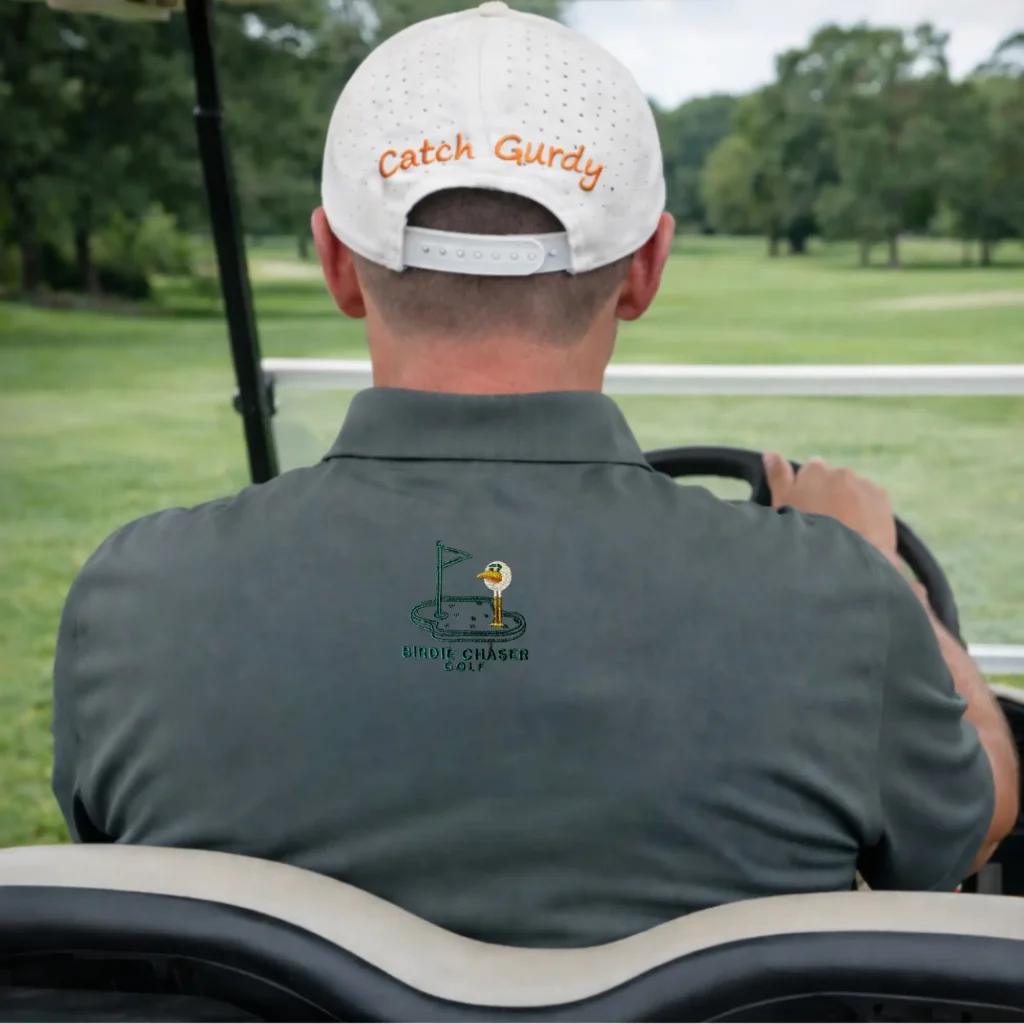
For shoes, spikeless golf shoes are the standard move. They grip the turf, look clean, and you can wear them straight into the clubhouse after your round. Metal spikes are banned at nearly every course now, so don’t worry about those.
A golf towel clipped to your bag, a hat for sun protection, and a ball marker round out the essentials. Beyond that, keep it simple. Performance fabrics that wick moisture and stretch with your swing beat cotton every time, especially in warmer months.
Skip These: What Not to Wear on a Golf Course
This is the short list that causes most dress code problems:
- jeans (some public courses allow them, but they’re banned more often than not)
- t-shirts, tank tops, and sleeveless shirts without a collar
- gym shorts, basketball shorts, or athletic joggers
- flip-flops, sandals, or open-toed shoes
- metal spike golf shoes (banned at virtually every course)
- anything with large logos, offensive graphics, or slogans
- cargo shorts or pants with oversized pockets
When in doubt, ask yourself: would this look out of place at a nice casual restaurant? If yes, it probably won’t fly on the course either. That mental check covers about 90% of dress code questions.
Your First Round Starts Here
Golf has a reputation for being stuffy about what you wear. The actual rules are simpler than that reputation suggests, and after a few rounds you won’t think twice about getting dressed for the course.
If you’re building your golf wardrobe from scratch, the Birdie Chaser Pro Shop carries polos, tees, hats, and accessories built for the course. And if you’re the type who wants first access to new drops and exclusive gear, the Birdhouse membership runs $6.99 a month and unlocks subscriber-only products you won’t find in the main shop.
Frequently Asked Questions
Can I wear sneakers to a golf course?
On most public and municipal courses, yes. Clean sneakers with a flat sole work fine. Resort and private courses typically require golf shoes, and spikeless is the standard now. If you’re not sure, check the course website or call the pro shop before your round.
What should a woman wear golfing for the first time?
A collared or mock-neck top, golf pants or a skort, and comfortable shoes with grip. You don’t need golf-specific clothing for your first round. A clean, athletic look that avoids denim, tank tops, and open-toed shoes will pass at most courses. Build from there as you figure out what feels best.
Do I have to tuck my shirt in to play golf?
At private clubs, almost always. At public courses, rarely. If you want to skip the tuck, look for polos with a straight hem designed to be worn untucked.
Can I wear a hoodie on the golf course?
It depends on the course. Public and resort courses are increasingly fine with clean, golf-styled hoodies. Private clubs are more mixed. If you’re unsure, a lightweight quarter-zip is the safer call. Works everywhere and layers easily over a polo on cool mornings.
What shoes should I wear golfing?
Spikeless golf shoes. They grip the turf, feel comfortable for four-plus hours of walking, and look right at any course. Metal spikes are banned at nearly every facility. If you’re brand new, clean flat-soled sneakers work at casual courses until you’re ready to buy a pair.